The Potato Eaters by Vincent van Gogh: Vibrant Color Edit
Free to Download & Reuse: You are welcome to use this image! If you republish or share it online, you must include a direct link back to this webpage for attribution.
Original Image Source: wikiart.org
The Potato Eaters by Vincent van Gogh
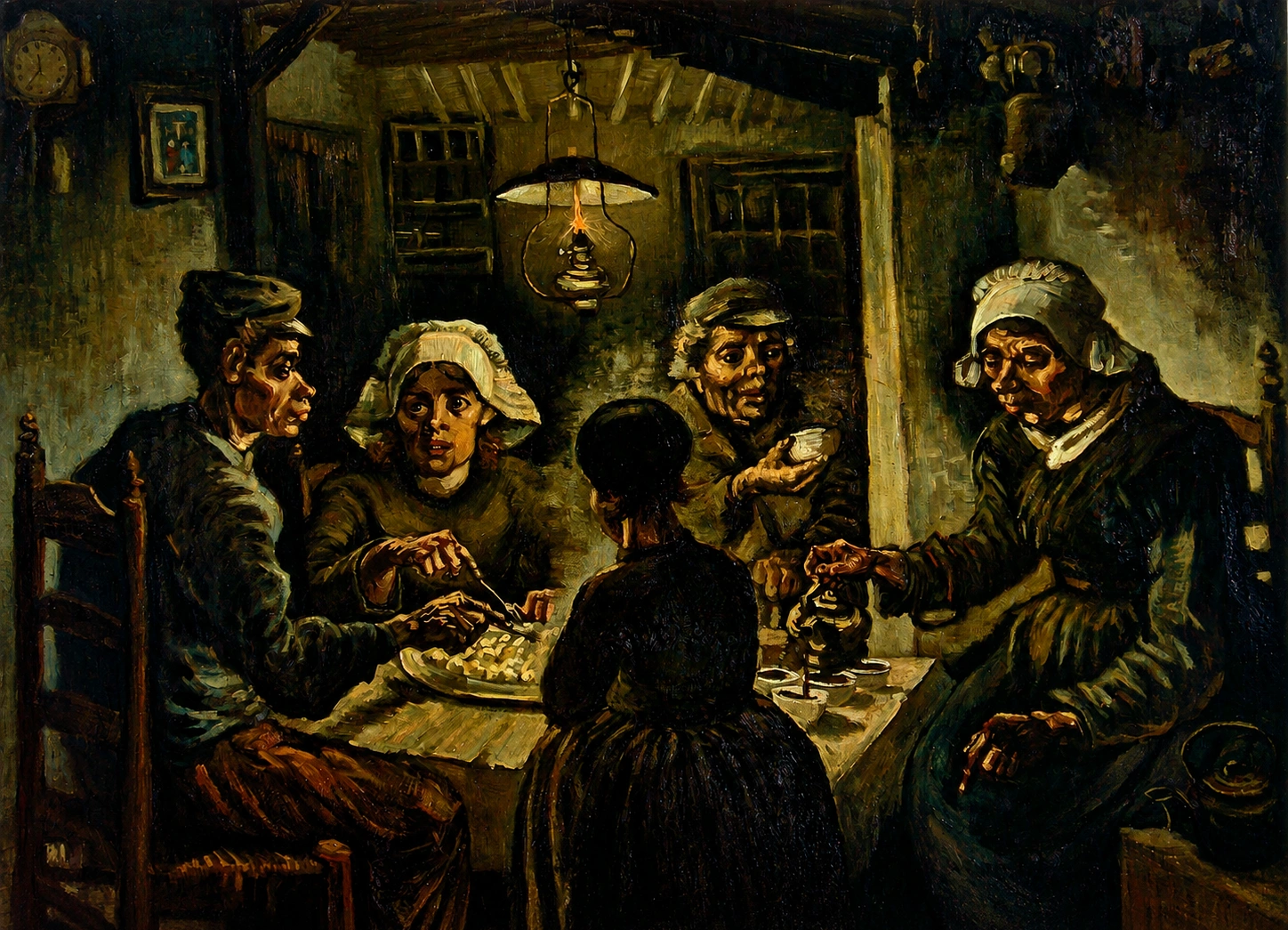
Vincent van Gogh’s “The Potato Eaters,” painted in 1885, is one of the most important works from the artist’s early Dutch period. Long before the brilliant yellows, blues, and swirling skies of his later years, Van Gogh was deeply focused on peasant life, rural poverty, and the dignity of labor. This painting shows five figures gathered around a small table in a dark cottage, sharing a simple meal of potatoes and coffee. The scene is humble, almost severe, yet it carries enormous emotional weight. Van Gogh was not trying to make peasant life appear picturesque or sentimental. He wanted the viewer to feel the roughness, exhaustion, and honesty of people whose lives were shaped by physical work.
A Dark Interior Filled with Human Presence
The composition places the viewer inside a cramped rural home. The figures sit closely together beneath the dim glow of an oil lamp, which becomes the central source of light and meaning. The room is dark, with heavy shadows swallowing the walls, ceiling beams, and corners. This darkness is not just a background effect. It helps create the atmosphere of poverty and confinement. The family seems enclosed by the weight of their surroundings, as if the cottage itself reflects the hardship of their lives.
At the same time, the lamp creates a small zone of warmth. Its yellowish light falls on faces, hands, cups, and the plate of potatoes. Van Gogh uses this contrast between darkness and light to guide the viewer’s attention. The most important parts of the painting are not decorative objects or elegant clothing, but the worn faces and working hands of the peasants. Their bodies lean inward, creating a tight circle of shared survival.
The Meaning of the Potato Meal
The potatoes at the center of the table are essential to the painting’s meaning. They are not simply food. They symbolize the direct relationship between labor and sustenance. Van Gogh wanted these figures to look like people who had “dug the earth” themselves. Their meal comes from the soil, and their bodies seem marked by that same soil. The brown, green, and black tones of the painting make the figures appear almost rooted in the earth they work.
This is why the painting feels so different from a traditional family dinner scene. There is no abundance, no polished tableware, no cheerful domestic comfort. The meal is plain and repetitive, but it is also honest. Van Gogh presents the potato as a sign of rural reality. It is the food of people who survive through effort, not luxury. By making this modest meal the emotional center of the painting, he gives peasant life a seriousness usually reserved for grand historical or religious subjects.
Faces Shaped by Labor
The figures in “The Potato Eaters” have often been described as rough, awkward, or even unattractive. This was intentional. Van Gogh did not want idealized beauty. He wanted faces that looked weathered, tired, and real. Their features are angular, their eyes are deep-set, and their skin is painted in earthy tones. Their expressions are quiet but intense. They do not perform for the viewer. They are absorbed in the ritual of eating after work.
The hands are especially important. They are large, bony, and strongly emphasized. These hands have planted, dug, carried, and prepared the food now being eaten. In many portraits, hands are refined details that express elegance or personality. Here, they express labor. Van Gogh makes them central to the moral force of the image. The peasants are not defined by wealth or social status, but by the work that allows them to live.
Color, Texture, and Earthiness
The color palette of “The Potato Eaters” is deliberately dark and muted. Van Gogh uses browns, olive greens, ochres, blacks, and dull yellows. These colors create a muddy, earthy effect. The painting seems almost made from soil, smoke, and lamplight. This limited palette also gives the work a feeling of unity. The people, furniture, food, and room all belong to the same world.
The brushwork is rough and expressive. Instead of smoothing every surface, Van Gogh allows the paint to remain visible and textured. This gives the painting a physical quality that matches its subject. The roughness of the technique mirrors the roughness of peasant life. The faces and hands are not polished into academic perfection. They are built up through strokes that feel urgent, searching, and emotional.
A Serious Vision of Peasant Life
“The Potato Eaters” shows Van Gogh’s ambition as a young artist. He was not merely painting a genre scene. He wanted to create a major work about the spiritual and moral dignity of ordinary people. In 1885, this was a bold artistic goal. Peasants had appeared in art before, but often as charming rural figures, comic characters, or picturesque symbols of simplicity. Van Gogh’s peasants are different. They are neither decorative nor romanticized. They are poor, tired, and imperfect, but they possess a quiet gravity.
The painting asks the viewer to look closely at people who might otherwise be ignored. It gives visual importance to a world far from urban comfort and artistic fashion. The dark cottage becomes a stage for human endurance. The family’s meal becomes a ritual of necessity. Their silence becomes part of the painting’s power.
The Role of Light and Spiritual Feeling
Although “The Potato Eaters” is not a religious painting in a traditional sense, it has a spiritual intensity. The lamp hanging above the table resembles a humble sacred light. It gathers the figures together and gives the scene a solemn focus. The shared meal also has a ritual quality. The peasants pass coffee, reach for food, and sit in a circle that suggests community, dependence, and mutual survival.
Van Gogh’s sympathy for these people is central to the work. He does not paint them from a distance of superiority. Instead, he tries to enter their world. The darkness, cramped space, and rough brushwork all help the viewer feel the physical and emotional atmosphere of the cottage. The painting is not comfortable, but it is deeply compassionate.
Why The Potato Eaters Matters
“The Potato Eaters” matters because it reveals Van Gogh before he became the painter of blazing color and expressive landscapes. It shows his early belief that art should speak about human truth. The painting may lack the brightness of “Sunflowers” or “Starry Night,” but it contains the same emotional seriousness. Van Gogh was already searching for a way to make paint carry feeling, sympathy, and spiritual intensity.
The work also marks an important step in his development. Its dark palette and heavy forms belong to his Dutch period, but its expressive distortion points toward the future. The faces are not anatomically graceful, yet they are psychologically powerful. The space is not elegant, yet it is unforgettable. Van Gogh was already willing to sacrifice conventional beauty for emotional truth.
Conclusion
“The Potato Eaters” is a painting about poverty, labor, family, and dignity. Its dark colors, rough textures, and solemn figures create one of Van Gogh’s most powerful early statements. The painting does not invite easy admiration through prettiness. Instead, it demands patience and empathy. It asks the viewer to see beauty in hardship, meaning in a simple meal, and humanity in worn faces and working hands.
In this humble cottage, Van Gogh found a subject worthy of deep artistic seriousness. The peasants eat potatoes beneath a dim lamp, but the painting transforms that ordinary moment into something lasting. “The Potato Eaters” remains one of the clearest expressions of Van Gogh’s early mission: to honor ordinary people by showing the truth of their lives.